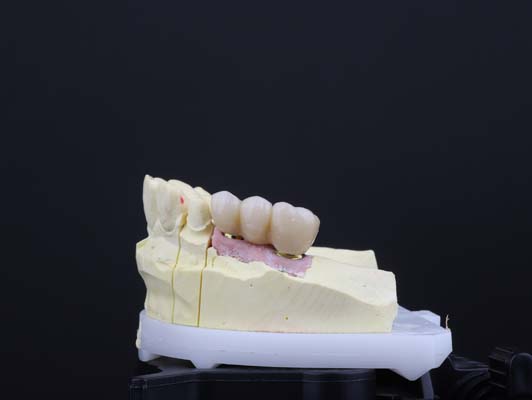
A dental bridge is an oral prosthetic that closes the space left by multiple missing teeth. It has two main components: artificial teeth called pontics and crowns (abutments) placed on the two teeth closest to the space on both sides. The artificial teeth can be made from various materials like gold, silver, and other metals, but porcelain pontics are the most popular since they look just like natural teeth.
Anchoring down a dental bridge
The type of dental bridge being installed in the patient’s mouth often dictates how the dentist goes about anchoring it down. Let us take a look at the four main types of dental bridges used in dentistry:
1. Conventional dental bridge
Traditional dental bridges are anchored down on the two teeth closest to the gap left by missing teeth. Crowns are usually placed on these teeth to strengthen them so they can provide more stability for the bridge. Preparing the abutments from crowns requires taking off enamel from their sides. That permanently leaves them altered, so they will always need a restoration to serve as their artificial enamel.
2. Cantilever dental bridge
Cantilever bridges are similar to traditional bridges, but there is one significant difference; the pontics are anchored down to only one abutment. These types of bridges are typically recommended when there is only one tooth next to the space left by lost teeth.
3. Maryland dental bridge
These also use two abutments like traditional bridges, but it does not require placing crowns on the teeth closest to the gap. Maryland bridges use a porcelain or metal framework bonded to the backside of the two teeth closest to the gap.
4. Implant-supported dental bridge
Implant-supported bridges might be recommended for patients who want a complete missing teeth solution. Implants are metal rods that serve as artificial teeth roots, and they help prevent the bone tissue loss that takes place when a tooth is lost.
Implants also happen to be one of the pricier ways to replace missing teeth, so dentists often recommend combining them with other restorations to reduce costs. That way, the patient still gets the bone preserving properties of implants while saving a considerable about of money. To keep things in perspective, the price of a single implant is typically more than the cost of a full set of dentures.
Implant-supported bridges involve inserting implants at the two ends of the space left by missing teeth and placing crowns on them. These crowns then serve as abutments that hold pontics that replace the rest of their missing teeth in place.
Benefits
Some of the benefits of replacing missing teeth with dental bridges include:
- Improves the patient’s smile
- Restores speech
- Improves chewing ability
- Helps to preserve the shape of the patient’s teeth
- Prevents the patient’s remaining teeth from moving out of their proper alignment
Replace your missing teeth
A dental bridge is one of the options you should consider if you have missing teeth. Give us a call or visit our Milwaukee clinic to set up an appointment with our dentist.
Request an appointment here: https://www.esdmke.com or call Eastside Dental at (414) 888-4000 for an appointment in our Milwaukee office.
Check out what others are saying about our dental services on Yelp: Dental Bridges in Milwaukee, WI.
Related Posts
A dental bridge can replace missing teeth, restore chewing support, and help keep the smile balanced. This restoration uses crowns and artificial teeth to fill a gap and usually attaches to nearby natural teeth or dental implants for support. While timelines can vary, partnering with our dentist can help extend your bridge's lifespan.The lifespan of…
A dental bridge can replace a missing tooth or a row of missing teeth. This dental restoration can prevent you from experiencing the complications of tooth loss. Knowing this treatment better can help you prepare for your next visit. Here are some dental bridge benefits that you must consider.Teeth have roots that anchor them to…
If you have been scheduled to receive dental bridges, it is normal to be worried about how long they will last. With adequate care, dental bridges can survive up to a decade of regular use. However, because people’s dental care habits and diets have significant effects on the lifespan of these devices, it is hard…
Teeth are similar to the rest of the body — with aging, they are susceptible to several health conditions that can hamper their appearance and functionality. People who are dissatisfied with their appearance because of severe tooth decay or tooth loss could consider dental bridges as their preferred method of restoration. The following are details…